Can You Run GrapheneOS on a Motorola Phone?
What GrapheneOS and Motorola have announced, which phone comes first, what's still unknown, and the best way to get GrapheneOS today.
Read article → PRIVACY FIRSTPUTTING YOUR PRIVACY FIRST.
GRAPHENEOS
Published 1 January 2024 · Updated 25 October 2026
GrapheneOS is a privacy- and security-focused mobile operating system based on Android. It's open source, it runs without Google services by default, and it's widely recommended by security researchers and privacy advocates. It didn't start out under that name, though, and its path to where it is today included a hostile split with its former sponsor.
This updated history draws on the project's own history page, its release notes and official announcements, current as of October 2026.
GrapheneOS was founded by Daniel Micay in late 2014 as a solo open-source project, building on his earlier privacy and security work. The early focus was low-level hardening: porting OpenBSD's malloc memory allocator to Android's Bionic C library, porting the PaX kernel hardening patches to supported devices, and hardening the compiler toolchain and Android's native libraries.
From the start, the project also worked on getting its changes accepted upstream, into the Android Open Source Project (AOSP) and other projects. According to GrapheneOS, a substantial portion of those early changes landed upstream, so some of the project's work ended up protecting ordinary Android users too.
In late 2015, a company was incorporated to become the project's primary sponsor, and the operating system became known as CopperheadOS. The idea was a sustainable business offering paid support and customised versions. The arrangement was meant to serve the open-source project, and it was agreed that the project would remain independently owned and controlled by Daniel Micay.
According to GrapheneOS, the company didn't live up to those commitments and ended up "holding back the open source project and taking far more from it than was provided to it".
In 2018, the relationship broke down. GrapheneOS's account is that the company's CEO attempted to take over the project through coercion; the attempt was rebuffed, but the company seized the infrastructure and donations. The project carried on without them, and the company is no longer associated with it in any way.
For anyone choosing a phone today, the practical point is simple: CopperheadOS and GrapheneOS are not the same thing, and only GrapheneOS is the continuation of the original project.
After the split, the project was briefly rebranded as AndroidHardening, and then as GrapheneOS, the name it has used since 2019. It moved to a funding model based on donations and collaborations with multiple companies, deliberately avoiding dependence on a single sponsor. The project has said it "will never again be closely tied to any particular sponsor or company".
Since the split, GrapheneOS has only officially supported Google Pixel phones. That's not brand loyalty. The project sets strict hardware requirements that most phones haven't met, including:
As of October 2026, officially supported phones run from the Pixel 6 to the Pixel 10 series, including the Pixel 10a. See our guide to the best Pixel for GrapheneOS if you're choosing one.
GrapheneOS ships updates frequently, but a handful of features stand out in its history.
The project's Auditor app uses the phone's hardware security features to verify that the operating system is genuine, unmodified and running with a locked bootloader, and it detects downgrades to older versions. One device can verify another, or the attestation.app service can check a phone on a schedule and send email alerts. GrapheneOS recommends setting it up after installation.
GrapheneOS's own memory allocator, hardened_malloc, adds guard regions, randomised layouts and memory zeroing to make a whole class of exploits harder. It continues the project's long focus on memory safety, which began with its 2014 work on Android's allocator.
GrapheneOS never includes Google services. In July 2021, it added experimental support for running Google Play services "as sandboxed user-installed apps without any special privileges". That compatibility layer, refined continually since, lets people use the Play Store, push notifications and most apps that depend on Google, but only in the profiles they choose and with no special access to the system. It's a big reason GrapheneOS became practical as an everyday phone.
GrapheneOS added ways to give apps less than they ask for. Storage Scopes and Contact Scopes let an app think it has access while you choose exactly which files or contacts it sees. Network and Sensors permission toggles let you cut an app off from the internet or from motion sensors.
When the Pixel 8 launched in October 2023 with ARM's Memory Tagging Extension (MTE), GrapheneOS shipped support within weeks: first as an opt-in, then, from the November 2023 release, always on for the operating system. MTE helps catch the memory-corruption bugs that most serious phone exploits rely on. GrapheneOS uses it by default to protect the base OS and known-compatible apps, and users can enable it for all apps.
In March 2023, the GrapheneOS Foundation was created as a non-profit organisation in Canada to receive and distribute donations. GrapheneOS says it now has multiple full-time and part-time developers, funded by donations and by companies collaborating with the project.
The 31 May 2024 release (2024053100) added a duress PIN and password. Entering it at any unlock prompt irreversibly wipes the device, including eSIMs, without needing a reboot. It joined other anti-theft and anti-seizure features such as auto reboot (18 hours by default, adjustable from 10 minutes to 72 hours), which puts a locked phone back into its most protected state, and USB-C port control, which by default limits the port to charging while the phone is locked.
GrapheneOS continues to track each new Android version. In September 2026, it fully updated supported Pixels to Android 17 QPR1.
The biggest change in the project's recent history is that GrapheneOS will no longer be Pixel-only.
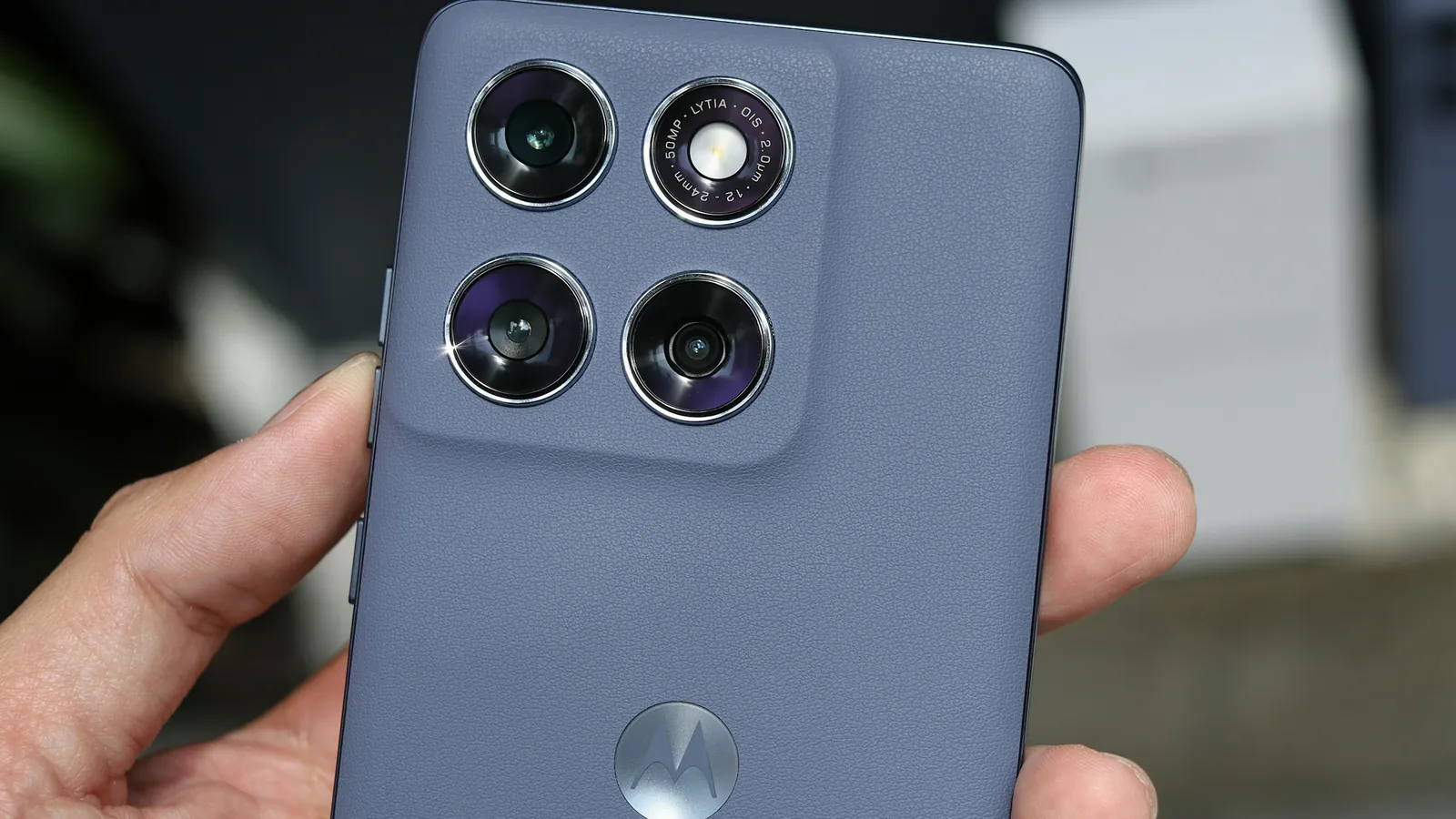
As of this update, no Motorola phone is on GrapheneOS's official supported devices list, and no release date has been given. GrapheneOS has said Motorola devices will run the same GrapheneOS as Pixels, not a modified version. For everything that's been officially said so far, see GrapheneOS on Motorola.
Twelve years on, GrapheneOS is an independent, non-profit-backed project with a paid development team, support for every current Pixel and a manufacturer partnership on the way. Its focus hasn't changed since 2014: strengthen Android's security at a low level, and give users control over what apps and services can see.
Privacy First isn't affiliated with the GrapheneOS project. We use it because it's the strongest mobile operating system available. If you'd rather not install it yourself, our GrapheneOS Australia guide explains your options, and the Privacy First 10a is a Pixel 10a with GrapheneOS installed and set up, ready to use.
GrapheneOS was founded by Daniel Micay in late 2014 as a solo open-source project. It's now developed by a team of full-time and part-time developers, with donations handled by the non-profit GrapheneOS Foundation, set up in Canada in March 2023.
No. The project was known as CopperheadOS while a company sponsored it from late 2015. After a split in 2018, the original project continued as GrapheneOS, and the company is no longer associated with it in any way.
After the 2018 split, the project was briefly called AndroidHardening and was then renamed GrapheneOS, the name it has used since 2019.
Because Pixels have been the only phones that meet its hardware security requirements, such as verified boot for alternative operating systems, a secure element, hardware memory tagging and long-term monthly security updates. Motorola is working with GrapheneOS on future devices that meet those requirements.
GrapheneOS has named the Motorola Signature 27 as its first supported Motorola phone, but as of October 2026 support hasn't been released, and no current Motorola phone is on the official supported list.
Yes. GrapheneOS is free and open source, funded by donations and collaborating companies. You can install it yourself on a supported Pixel, or buy a phone with it already installed.
What GrapheneOS and Motorola have announced, which phone comes first, what's still unknown, and the best way to get GrapheneOS today.
Read article →How they compare on security, device support and updates, and how our custom Security Protocol goes further than either on its own.
Read article →Why most banking apps work on GrapheneOS, why some don't, and how to check yours before you switch.
Read article →